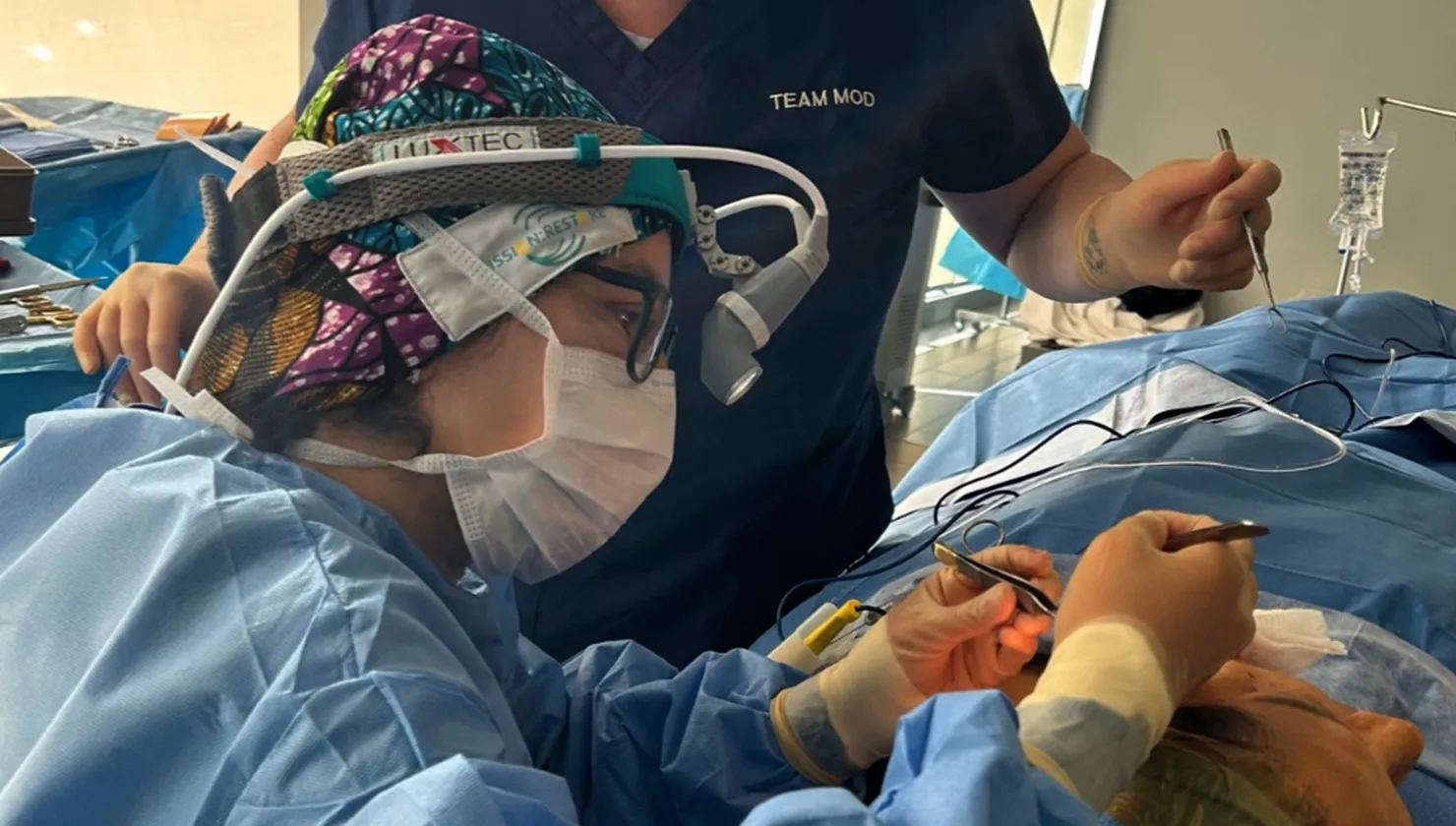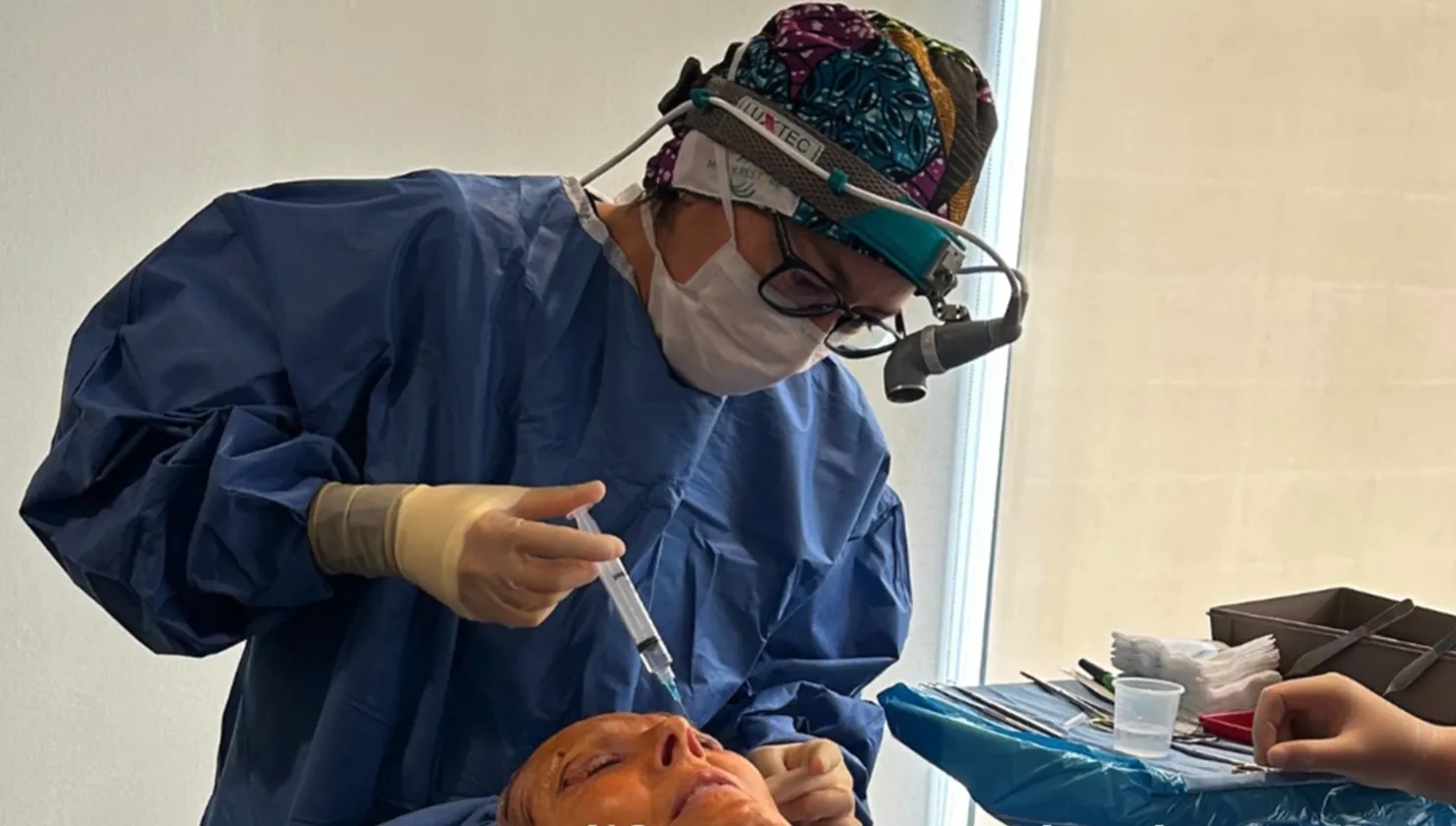
A natural facelift relies on structural deep-plane SMAS repositioning—not skin tension. Dr. Aycock details how nerve-sparing dissection, tension-free closures, and micro-fat grafting deliver results that last a decade without looking “operated on.
-
About "The Surgeon’s Eye" Series:
Written by board-certified plastic surgeon Dr. Joyce Aycock, The Surgeon’s Eye series moves beyond basic procedure overviews to explore the complex surgical mechanics, anatomical precision, and textbook techniques behind natural, long-lasting results.
When patients consider a facelift, their single greatest fear is looking “windblown,” stretched, or unnatural. The truth behind that artificial look lies in a fundamental surgical flaw: pulling on skin instead of elevating the underlying structural foundation of the face.
In real life—away from high-contrast photos—a successful facelift should be completely imperceptible. No one should know you had surgery unless you choose to tell them. Achieving a natural, decade-long result requires working beneath the skin in the SMAS (Superficial Musculoaponeurotic System) layer.
1. The Clinical Philosophy: Undetectable Refinement Over Exaggerated Pulling
My goal with a facelift is to highlight a patient’s natural features by working directly with their anatomy to minimize signs of aging in a sophisticated, balanced way.
I deliberately avoid aggressive, single-vector approaches that might look dramatic in immediate before-and-after photos but appear distorted, tight, and obviously surgical in person. By prioritizing structural integrity over skin tightness, we achieve a refreshed, youthful look that holds up beautifully years down the road.
2. Planning & Anatomy: Navigating Nerve Pathways & Vector Dissection
A successful facelift is rarely performed in isolation; it functions as part of a comprehensive facial rejuvenation plan that may include a brow lift, blepharoplasty, and facial fat grafting.
When planning the surgery, every incision line and vector of elevation is mapped with extreme anatomical precision:
- Incision Placement: Pre- and post-auricular incisions are contoured to the ear’s exact borders to prevent hairline distortion or visible scarring. When central neck restoration is required, a discrete submental (chin) incision is positioned to access the subplatysmal area while remaining hidden from front-facing view.
- Nerve Protection (“Pitanguy’s Line”): Navigating the deep plane requires extensive knowledge of facial nerve anatomy. We carefully map Pitanguy’s line (the trajectory of the frontal branch of the facial nerve) and plan our entry point beneath the SMAS layer to safeguard the buccal and zygomatic branches that control facial movement.
- Dual-Layer Vectors: Once deep dissection is complete, the SMAS layer is elevated along a vertical vector to lift fallen midface fat and smooth jowls. Skin is then draped gently over the newly sculpted foundation and trimmed without tension.
3. Choice of Technique: The Deep Plane Preservation Approach
Having utilized various facelift techniques throughout my career, my preferred method is the Deep Plane Facelift. By releasing the natural anchoring ligaments beneath the SMAS layer, deep plane dissection provides the most powerful, durable, and natural lifting effect available in modern plastic surgery.
Because this technique operates in close proximity to facial nerve branches, specialized surgical training is essential:
- Advanced Training: In 2013, I traveled to Melbourne, Australia, to complete advanced anatomical training at the MAFAC course with Dr. Bryan Mendelson, one of the primary pioneers of the modern deep plane facelift.
- Technique Integration: My approach combines refined concepts from world-renowned deep plane innovators—including Dr. Andrew Jacono, Dr. Mike Nayak, Dr. Timothy Marten, and Dr. Francisco Bravo—to deliver a state-of-the-art procedure for my patients.
| Approach | Surgical Layer | Primary Benefit | Drawbacks |
|---|---|---|---|
| Skin-Only / Mini Lift | Surface Skin | Quick recovery; can be done under local anesthesia | Short-lived, doesn’t change structure of the face |
| SMAS Plication / Trim | Tightens SMAS surface | Good improvement without deep dissection | Less repositioning of facial fat pads |
| Deep Plane Facelift | Sub-SMAS / Ligament Release | Complete structural restoration; long lasting results | Requires expert knowledge of facial nerve anatomy |
4. Intra-Operative Nuance: Hidden Hairlines & Drain-Free Healing
To ensure patients can wear short hair or pull their hair back into a high ponytail without hesitation, incision design and tension management are paramount:
- Tragal & Post-Auricular Contour: The anterior incision follows the natural junction where the ear meets the cheek. Behind the ear, the incision curves along the ear’s base and crosses into the hairline at the ear’s widest point, hiding the line behind the ear’s natural projection.
- Trichophytic Hairline Infiltration: Incisions at the hairline are angled at 45 degrees (beveling) so hair follicles grow directly through the healed scar, rendering it virtually invisible.
- Tension-Free Skin Closure: All lifting forces are anchored in the deep structural tissues. The skin sits completely tension-free, allowing it to heal flat without pull lines or stretched earlobes (“pixie ear”).
- Drainless Hemostatic Net: I eliminate the need for uncomfortable surgical drains by applying a specialized hemostatic net of temporary sutures. This holds the skin smoothly against underlying tissue during the first 48 hours. The net is removed in-office at Day 2 with no lasting marks, significantly reducing post-op bruising.
5. Recovery & Longevity: Fast Recovery & 10-Year Structural Integrity
Because deep plane dissection preserves the blood supply directly attached to the skin flap, post-operative skin healing is optimal, and the risk of skin compromise is drastically reduced.
- Immediate Post-Op (First 48 Hours): Pain is surprisingly low due to long-lasting local anesthesia and minimal anatomical disruption. Most patients manage comfortably with plain Tylenol, ibuprofen, and minimal short-term medication.
- Volume Restructuring: True longevity isn’t just about lifting; it’s about volume balance. We selectively unweight heavy, sagging fat weighing down the lower face, while performing micro-fat grafting to restore youthful volume to deflated temples, brows, and midface contours.
- Long-Term Result: Because the underlying muscular framework is repositioned rather than pulled, the lift endures naturally for a decade or more as your face ages gracefully on a higher, refreshed baseline.
6. The Surgeon’s Note
Every face displays a distinct pattern of facial aging, volume distribution, and skin elasticity. To see real-world examples of how deep-plane structural restoration transforms facial harmony, explore our online Facelift Before & After Gallery, or request a private portfolio review during your in-office consultation.
Take the Next Step
If you are noticing jowling, midface sagging, or loss of neck definition and want a natural, long-lasting result, an in depth in person evaluation is the most effective starting point. Schedule your private consultation with Dr. Aycock to discuss an individualized facial rejuvenation strategy.
Explore More from The Surgeon’s Eye Series
- Previous Entry: The Surgeon’s Eye: Eyelid Lift (Blepharoplasty) & Brow Rejuvenation
- Related Guide: The Ultimate Time-Saver: Why a Facelift is Actually Low-Maintenance
- Browse All Masterclass Posts Visit The Surgeon’s Eye Series Hub →