Repairing a split or stretched earlobe requires far more than stitching tissue together. Dr. Aycock explains how notch-preventing V-plasty, edge freshening under loupe magnification, and age-reversing earlobe reduction deliver smooth, virtually invisible scars.
-
About "The Surgeon’s Eye" Series:
Written by board-certified plastic surgeon Dr. Joyce Aycock, The Surgeon’s Eye series moves beyond basic procedure overviews to explore the complex surgical mechanics, anatomical precision, and textbook techniques behind natural, long-lasting results.
A torn or elongated earlobe is often dismissed as a minor cosmetic nuisance, but reconstructing it gracefully is an exercise in high-precision surgery. Whether caused by years of wearing heavy earrings, an accidental pull, or gradual age-related tissue stretching, repairing an earlobe demands careful architectural planning.
A poorly executed repair simply cuts out the tear and sews the skin in a straight line. The result? A stretched, unnatural shape, a telltale “notch” at the bottom border, or an earlobe that cannot safely support jewelry again.
1. The Clinical Philosophy: Rejuvenation Over Simple Closure
My primary goal when approaching earlobe repair is twofold: structural integrity and aesthetic proportions. Simply closing the gap without evaluating the surrounding tissue often leaves an abnormally long or misshapen lobe. Since earlobes continue to grow with age, an earlobe reduction can provide subtle rejuvenation of the face.
Our surgical approach varies based on your unique anatomical needs:
- Preserving Natural Contour (No Excess Tissue): For patients with normal lobe proportions, we focus entirely on pristine edge alignment and notch prevention.
- Earlobe Rejuvenation (Enlarged/Aging Lobes): For older patients or those with elongated lobes, we reduce the entire earlobe during the repair. By placing the reduction scar discreetly at the ear-to-cheek junction—the exact line used in a facelift—we restore a more youthful shape while keeping the scar virtually undetectable.
2. Planning & Anatomy: Edge "Freshening" & Vascular Alignment
When an earlobe splits—whether partially or completely—the exposed edges heal over with epithelialized (scar) tissue. To ensure the two sides fuse seamlessly, we must meticulously “freshen” the lining.
During pre-operative marking:
- Edge Resection: We excise a precise, tiny wedge of scar tissue along the tear under high-powered loupe magnification.
- Notch Prevention (V-Plasty / Step-Off): A straight vertical scar shrinks as it heals, pulling the bottom border upward into an unsightly V-shaped “notch.” To prevent this, we design a small V-flap (step-off) across the outer margin of the lobe. This technique disrupts linear scar contraction, ensuring the lower border remains smooth and rounded.
3. Choice of Technique: Straight-Line vs. Architectural Reconstruction
| Approach | Surgical Technique | Aesthetics & Shape | Long-Term Outcome |
|---|---|---|---|
| Simple Straight-Line | Linear edge trimming & suture | Elongates the lobe; prone to a "stepped" or notched bottom | High risk of re-splitting; obvious scar line |
| V-Plasty / Z-Plasty Step-Off | Interlocking micro-flaps at border | Preserves rounded border; zero notching | Robust structural repair; withstands future re-piercing |
| Combined Repair & Reduction | Wedge resection with ear/cheek junction scar | Restores youthful proportions with smaller earlobe overall | Rejuvenates the entire lower face profile |
4. Intra-Operative Nuance: High-Magnification Precision
Because earlobes lack cartilage and consist entirely of skin and subcutaneous fat, reconstructing the internal “meat” of the lobe is crucial for long-term strength.
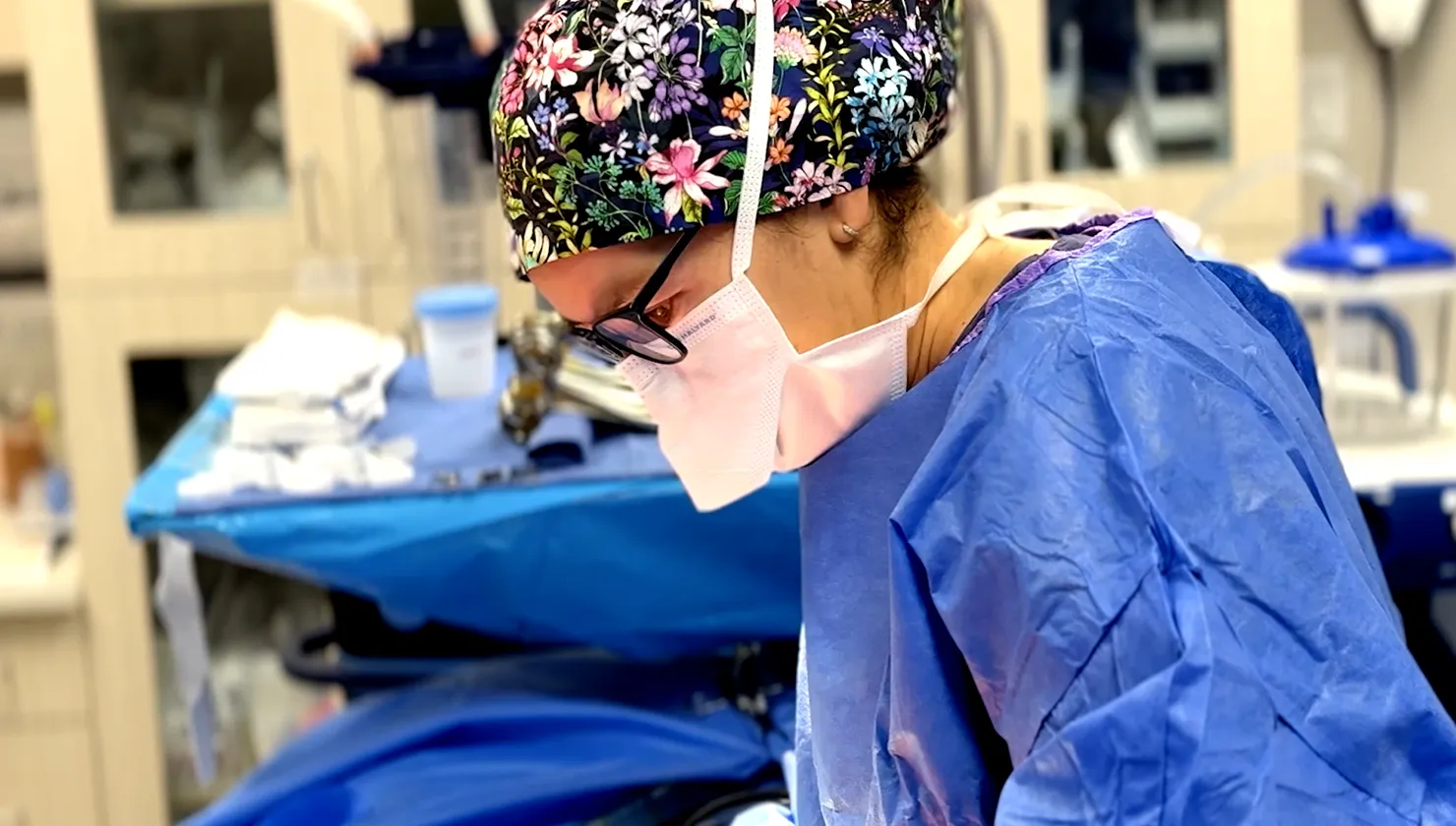
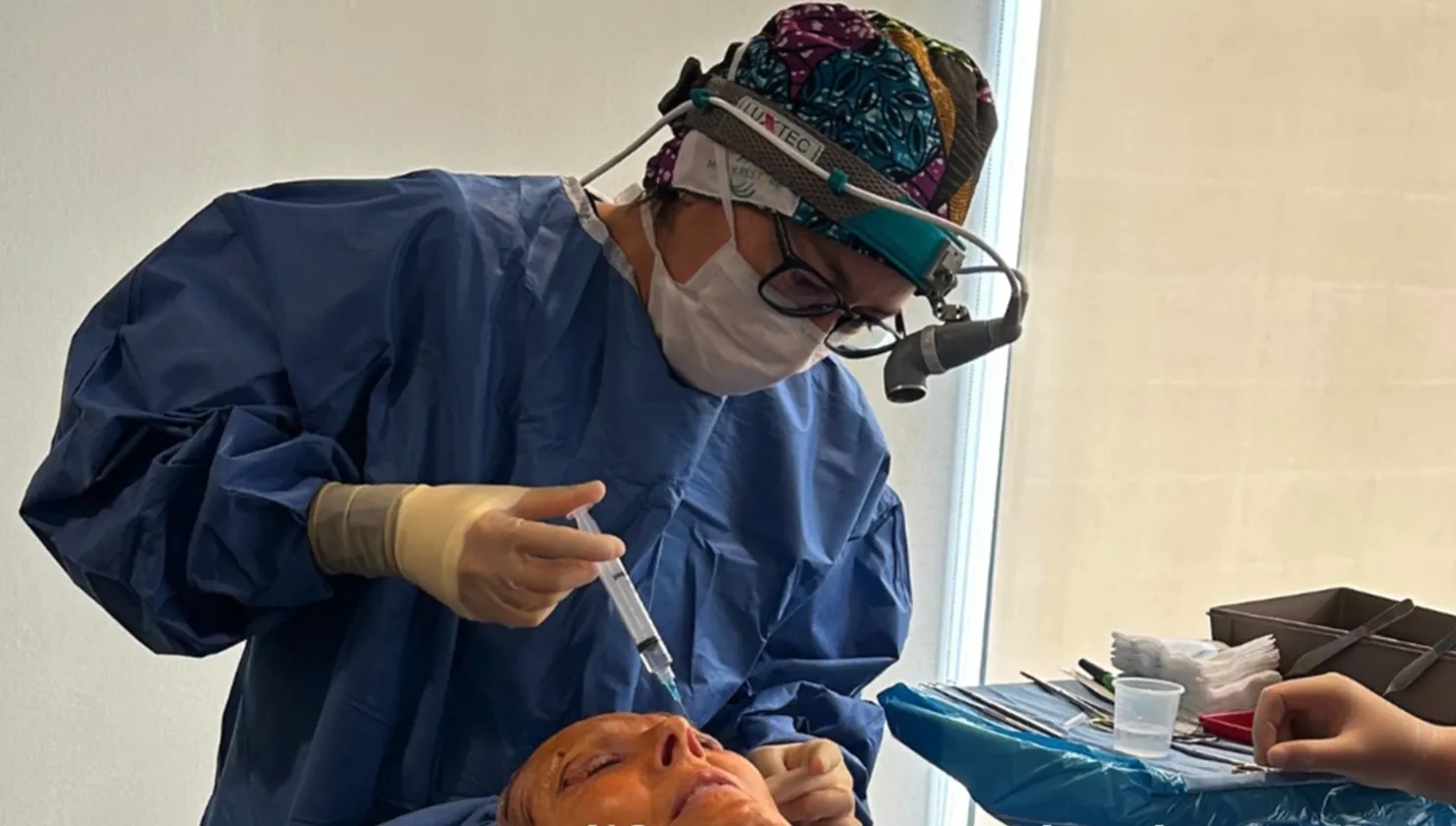
- Surgical Loupe Magnification: Every step is performed under high-powered optical loupes to ensure flawless alignment of the skin layers and underlying soft tissue.
- Multi-Layer Internal Reconstruction: Deep structural sutures are placed within the fat layer to bear the internal tension, allowing the surface skin to rest completely tension-free.
- Fine Suturing (6-0 Nylon): We use ultra-fine 6-0 sutures that are removed within 5 to 7 days. Early suture removal prevents “railroad track” marks, leaving a faint, soft line that fades over time.
5. Recovery & Longevity: A 30-Minute In-Office Procedure
Torn earlobe repair is performed comfortably in our boutique office suite under local anesthesia, eliminating the need for general anesthesia or hospital facility fees.
- Comfort Protocol: Local numbing medication is infused slowly using an ultra-fine 33-gauge needle—so small it is barely felt—minimizing initial sting or discomfort.
- Immediate Recovery: The procedure takes roughly 30 minutes. Once the 12-hour numbing effect wears off, post-operative discomfort is minimal and easily managed with over-the-counter Tylenol or Advil.
- Re-Piercing Timeline: Once healed, the newly constructed tissue is strong and durable. If desired, we can safely re-pierce your earlobes after complete tissue maturation, ensuring the new hole is positioned away from the healing scar line.
6. The Surgeon’s Note
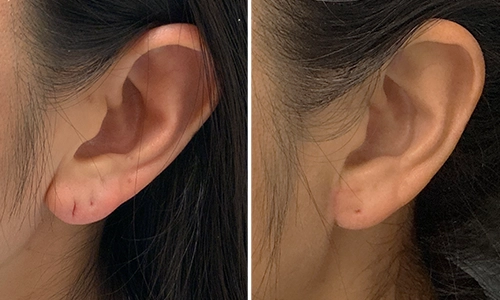
“In this featured case, the patient presented with elongated, split earlobes from years of heavy jewelry. Rather than simply closing the tears, we performed an integrated earlobe reduction—placing the primary incision at the natural ear/cheek junction to shorten and reshape the lobe. As an added benefit, we repurposed a previous secondary piercing site into her new, perfectly centered primary piercing position.”
Take the Next Step
Whether you have a fully split earlobe, stretched pierceless lobes, or want to rejuvenate enlarged lobes, a personalized assessment will determine the ideal reconstruction plan. Schedule your private consultation with Dr. Aycock to restore a natural, symmetric shape.
Explore More from The Surgeon’s Eye Series
- Previous Entry: The Surgeon’s Eye: Deep Plane Facelift — Structural SMAS Elevation vs. Surface Tension
- Related Guide: Earlobe Repair: Restoring the Foundation for Your Favorite Jewelry
- Browse All Masterclass Posts Visit The Surgeon’s Eye Series Hub →